
Visual Merchandising: 2026 Guide with Examples


- What is Visual Merchandising?
- Key Factors for Visual Merchandising Success
- Why is Visual Merchandising Important?
- Real-World Examples of Effective Visual Merchandising
- Responsibilities of a Visual Merchandiser
- Benefits of Outsourcing Visual Merchandising Services
- Visual Merchandising Trends for 2026
- Conclusion
When you walk into a retail store, what is the first thing you do? You look around. Even before you have a conversation with anyone, you take in the visual sights the store has to offer. Whether it is new product displays, ongoing discounts, or just figuring out where things are located, you are gathering all this information without saying a single word. It might sound like a dream for introverts, but this shopping paradise is the work of strategic and carefully planned visual merchandising.
What is Visual Merchandising?
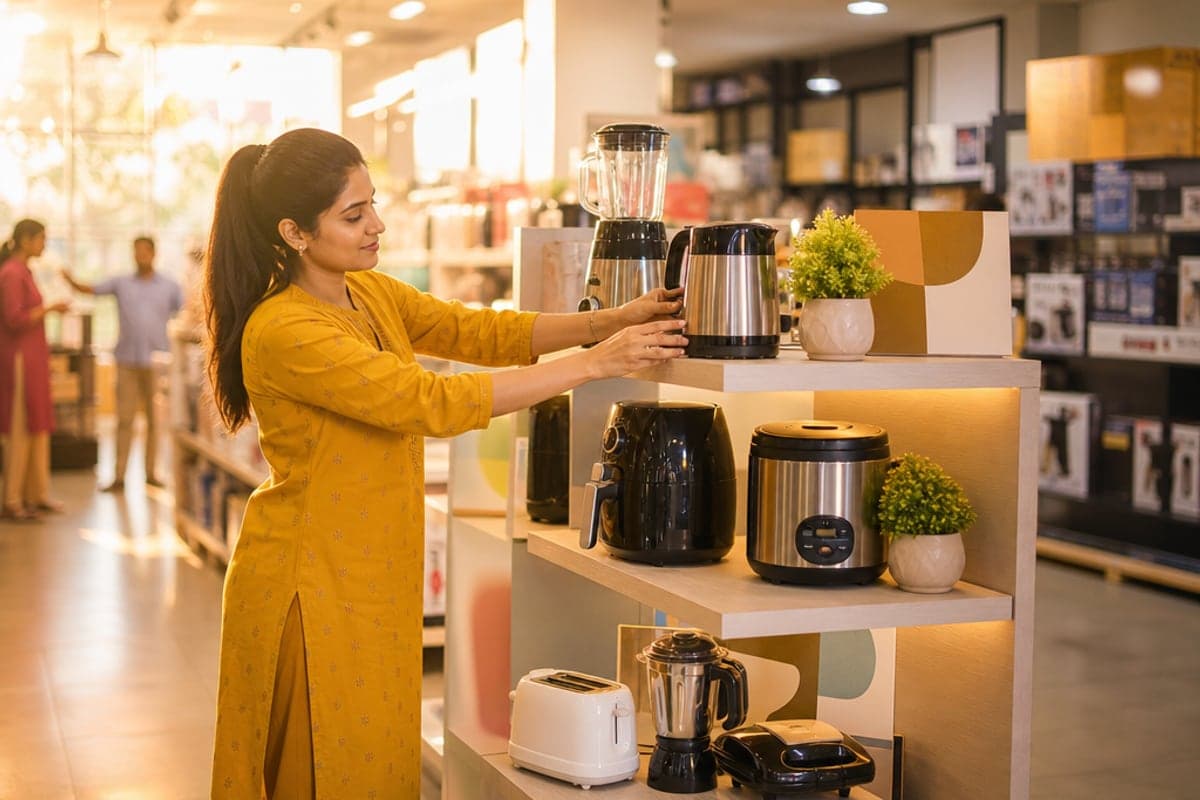
Visual merchandising is a strategic retail technique that enhances product presentation to attract, engage, and convert shoppers. Acting as a silent salesperson, it combines store layout, displays, lighting, and digital signage to influence purchasing decisions. Beyond aesthetics, it strengthens brand identity and drives sales by creating immersive shopping experiences.
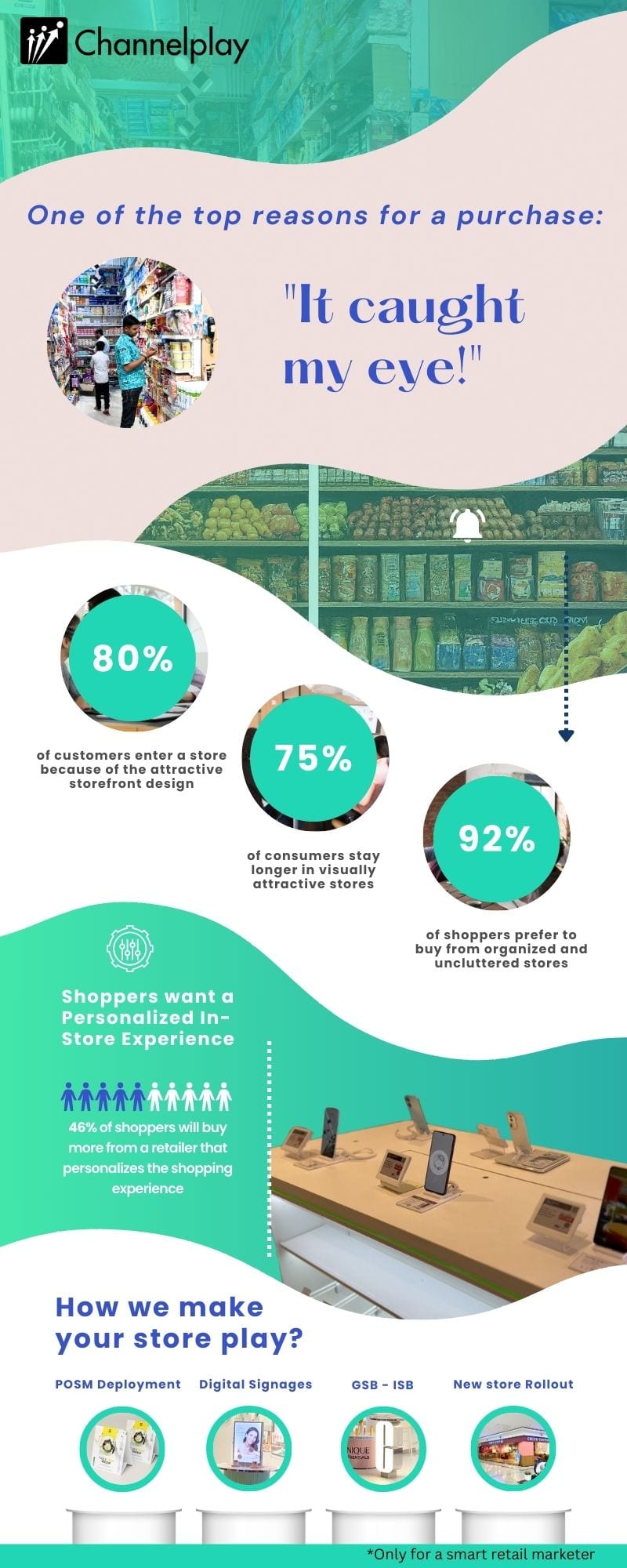
Did you know? Research shows that 73% of customers are more likely to return to stores with compelling visual merchandising, and 68% of shoppers make purchasing decisions based on visual displays and signage.
Key Factors for Visual Merchandising Success
Successful visual merchandising requires careful consideration of multiple elements that work together to create an engaging retail environment:
- Signages: Act as identifiers, showcasing the store's name or promotional messages, helping customers locate the shop from a distance.
- Entrance: The gateway to the store should be inviting, well-lit, and welcoming.
- Selling Space: Organized to ensure smooth navigation, with well-defined product zones.
- Personnel Space: Strategically located areas for staff like fitting rooms, cash registers, and workstations.
- Store Design: Reflects brand identity and creates a cohesive atmosphere.
- Fixtures and Lighting: Display racks, mannequins, and proper lighting enhance product presentation and ambience.
- Merchandising Space: Showcases products with thoughtful placement, signage, and lighting to draw attention.
Why is Visual Merchandising Important?
Visual merchandising is crucial for retail success in 2026 because it directly impacts customer behavior and business outcomes. Here's why it matters:
- Drives Sales: Strategic signage can increase impulse purchases by 20%, while compelling window displays boost foot traffic by 23%
- Enhances Customer Experience: 8 out of 10 shoppers base their buying decisions on what they see in-store
- Builds Brand Identity: Consistent visual presentation strengthens brand recognition and loyalty
- Increases Return Visits: 73% of customers are more likely to return to well-merchandised stores
- Improves Customer Engagement: Interactive displays and thoughtful layouts encourage customers to spend more time exploring products
Measuring Visual Merchandising Success:
To evaluate the effectiveness of your visual merchandising strategies, track these key performance indicators:
- Foot Traffic: Number of customers entering the store
- Conversion Rate: Percentage of visitors who make a purchase
- Dwell Time: Average time customers spend in specific display areas
- Customer Engagement: Interaction with displays and promotional materials
- Sales Per Square Foot: Revenue generated per unit of retail space
- Customer Satisfaction: Feedback on product availability and presentation
Real-World Examples of Effective Visual Merchandising
Here are practical examples of how different retail sectors implement visual merchandising successfully:
1. Fashion and Apparel
- Strategically arranged mannequins showcase complete outfits with coordinated accessories and shoes
- Window displays featuring seasonal collections that tell a story and inspire customer imagination
- Color-blocked merchandise arrangements that create visual impact and ease navigation
- Interactive fitting room experiences with digital mirrors and styling suggestions
2. Beauty and Cosmetics
- Minimalist product displays with clean lines and soft lighting create a luxurious atmosphere
- Testers organized by product type and color families for easy exploration
- Educational signage highlighting ingredient benefits and application techniques
- Instagram-worthy beauty stations encouraging social media sharing
3. Home Décor and Furniture
- Room vignettes showcasing complete living spaces to inspire customer creativity
- Themed displays that change with seasons and trending interior design styles
- Tactile experiences allowing customers to touch fabrics and test furniture comfort
- Mix-and-match displays demonstrating product versatility
4. Electronics and Technology
- Products organized by category with clear, informative signage explaining features
- Live product demonstrations and interactive stations for hands-on testing
- Comparison displays highlighting differences between models and price points
- Educational content addressing common customer questions and use cases
For seasonal campaigns, retailers can amplify these techniques with holiday-themed displays, limited-time offers, and festive decorations that create urgency and excitement.
Responsibilities of a Visual Merchandiser
Visual merchandisers play a critical role in shaping the customer experience and driving retail success. Their responsibilities span strategic planning, creative execution, and ongoing maintenance:
Display Planning and Execution
- Execute visual merchandising plans and strategies as directed by the Visual Merchandising Manager
- Set up and dismantle in-store displays, window displays, and promotional setups
- Ensure all visual displays are current, creatively designed, and engaging
- Create eye-catching window displays that attract passersby and drive foot traffic
Store Maintenance and Updates
- Maintain visual merchandising standards throughout the store, ensuring a clean and organized appearance
- Regularly update displays to reflect new product launches, seasonal themes, and promotional activities
- Incorporate seasonal visual merchandising strategies to align store aesthetics with current trends and events
- Arrange product layouts to maximize visual appeal and optimize space utilization
Team Collaboration and Training
- Collaborate with store managers and staff to coordinate merchandising efforts
- Communicate visual merchandising plans and changes to store teams effectively
- Provide training and guidance to store staff on maintaining visual standards
- Work with marketing teams to ensure displays align with promotional campaigns
Performance Monitoring and Reporting
- Monitor and report on the effectiveness of visual merchandising initiatives
- Conduct regular store walkthroughs to ensure compliance with visual merchandising standards
- Utilize brand guidelines to maintain consistency across all visual elements
- Analyze customer engagement with displays and suggest improvements
Essential Skills and Qualifications:
- Strong eye for detail and aesthetic sensibility
- Excellent organizational and time-management abilities
- Effective communication and interpersonal skills
- Ability to work independently and as part of a team
- Physical capability to lift and arrange displays
- Creativity and problem-solving aptitude
- Education: Generally, completion of 12th standard is adequate for most projects, though a degree or certification in visual merchandising, design, or a related field is beneficial
Benefits of Outsourcing Visual Merchandising Services
Outsourcing visual merchandising to specialized agencies offers numerous advantages that can transform your retail operations and drive business growth:
- Access to Specialized Expertise: Tap into the knowledge of professionals who specialize in visual merchandising strategies, staying current with industry trends and best practices. Expert agencies bring proven techniques that maximize display effectiveness and customer engagement
- Cost-Effectiveness: Reduce overhead costs associated with maintaining an in-house team, including salaries, benefits, training, and equipment. Outsourcing provides access to skilled professionals without the long-term financial commitment
- Flexibility and Scalability: Quickly scale your visual merchandising efforts according to seasonal demands, promotional campaigns, and business growth. Service providers adapt resources efficiently to meet changing needs without compromising quality
- Consistent Brand Presentation: Ensure uniform visual standards across multiple store locations with dedicated teams trained in your brand guidelines. Maintain consistency that strengthens brand identity and customer recognition
- Focus on Core Business: Free up internal resources to concentrate on core business activities like sales, customer service, and strategic planning while experts handle visual merchandising execution
- Access to Advanced Technology: Leverage cutting-edge tools and software for planogram creation, 3D visualization, and performance tracking without investing in expensive systems
Choosing the provider matters as much as the decision to outsource. A capable visual merchandising agency brings a comprehensive suite of services to help a business optimise its retail operations and create captivating in-store experiences that drive sales and enhance customer satisfaction. Two qualities are worth checking for:
1. Attention to Detail: Success in visual merchandising lies in the details, so meticulous attention to them has to be ingrained in how a provider approaches the work. From the arrangement of products to the ambience of the store environment, every element needs to align seamlessly to captivate customers and drive sales, and it is that consistency that leaves a lasting impression on shoppers.
2. Scalable and Flexible Services: The retail landscape is constantly evolving, so an arrangement has to adapt to changing market dynamics and business requirements — covering support for a single campaign as readily as ongoing visual merchandising management.
Quality check in visual merchandising deserves as much attention as the execution itself. While visual merchandising is common in India, not all agencies prioritise post-execution checks, which leads to issues for brands. The safeguard is a set of Key Performance Indicators that emphasise Quality Control across every stage, from POSM deployment to visual planogram adherence. Rigorous training and thorough checks keep deployment accurate and in line with brand guidelines, while detailed reviews of before-and-after images for product planograms confirm compliance with outlet specifications. Quality control integrated from start to finish is what holds standards in place.
Retail merchandising execution software addresses the multifaceted challenges of VM execution, providing comprehensive monitoring capabilities and insights at every level of execution. Three capabilities are worth insisting on:
1. Data Integrity Assurance: Preventing data manipulation is critical. Implementing self-assessment mechanisms during data capture and incorporating geotagging functionalities bolsters data authenticity.
2. Route Tracking and Productivity Monitoring: The app should provide real-time productivity alerts and scheduled performance updates, ensuring proactive management intervention.
3. Notification Enabler: Robust communication is facilitated by automated notifications. Ensuring guidelines' delivery and tracking recipients' interactions streamlines team-wide communication.
Visual Merchandising Trends for 2026
The retail landscape is evolving rapidly, and visual merchandising strategies must adapt to meet changing consumer expectations. Here are the key trends shaping visual merchandising in 2026:
1. Modular and Flexible Display Systems
With 65% of retailers planning to invest in modular designs by 2026, flexibility has become paramount. Modular displays allow stores to quickly adapt layouts for seasonal changes, new inventory, and promotional campaigns without major renovations. This approach reduces costs while maintaining fresh, dynamic retail environments.
2. AI-Driven Store Optimization
Artificial intelligence is revolutionizing visual merchandising through data-driven decision-making. AI algorithms optimize store layouts, product displays, and lighting based on real-time customer traffic patterns, sales data, and mood analysis. This technology enables retailers to create personalized shopping experiences that respond to customer behavior dynamically.
3. Sustainability and Eco-Conscious Design
66% of shoppers prioritize eco-conscious brands, and 72% of consumers consider environmental responsibility when making purchase decisions. Retailers are responding by incorporating sustainable materials, reusable display elements, and eco-friendly lighting. Natural materials like wood, jute, and recycled materials are becoming standard in modern display design.
4. Experiential and Interactive Retail
81% of consumers are willing to pay more for enhanced shopping experiences. Interactive displays, touchscreens, virtual try-on stations, and immersive brand experiences are transforming stores into destinations rather than transaction points. This trend is particularly important for creating memorable moments that drive customer loyalty.
5. Omnichannel Visual Integration
Modern consumers expect seamless experiences across online and offline channels. 72% of consumers favor stores offering personalized in-store experiences, with 70% preferring hybrid shopping that combines digital convenience with physical engagement. Learn more about implementing omnichannel visual merchandising strategies and explore successful omnichannel retailing examples from leading brands.
6. Social Media-Ready Displays
With 69% of Gen Z shopping in-store weekly driven by social media trends, creating Instagrammable moments has become essential. Retailers design photogenic spaces that encourage customers to share their experiences on social platforms, generating organic marketing and brand awareness.
7. Augmented Reality and Virtual Showrooms
AR technology is enabling virtual try-ons and product visualization, allowing customers to see how products look in their own space before purchasing. Virtual showrooms create immersive online shopping environments that bridge the gap between digital and physical retail experiences.
8. Handcrafted and Tactile Elements
There's a renewed appreciation for handcrafted aesthetics featuring layered paper cut-outs, painted backdrops, and natural material finishes. This trend adds warmth and authenticity to retail spaces, creating emotional connections with customers.
Conclusion
Visual merchandising is far more than creating attractive displays—it's about crafting immersive shopping experiences that captivate customers, drive sales, and reinforce brand identity. With 73% of customers more likely to return to well-merchandised stores and strategic displays increasing impulse purchases by 20%, the impact on business performance is undeniable.
By strategically leveraging store layout, signage, lighting, point-of-sale materials, and emerging technologies like AI and AR, retailers create inviting environments that resonate with shoppers and inspire purchases. Success in 2026 requires balancing sustainability, personalization, omnichannel integration, and experiential elements while maintaining consistent brand presentation.
